
Learn Coding Through Play
Many parents wonder whether young children are suitable for learning coding. Most people think programming is boring, difficult, and full of complicated codes, which is only fit for older students. However, kids’ coding education is never about rigid memorization or difficult technical knowledge. It is a fun, exploratory journey that cultivates thinking ability through hands-on play.
The most effective way for children to learn is through play.
Kids are naturally curious, creative, and hands-on learners. Traditional textbook learning often makes children feel bored and resistant to studying. In contrast, learning coding through games, building blocks, robot projects, and interesting experiments perfectly matches children’s learning instincts.
Our kids’ coding courses adopt a child-centered, play-based teaching method. We cover Scratch block coding, MakeCode creative projects, Microbit hardware experiments, and basic Python programming. Instead of memorizing cold codes, children learn core programming logic by designing mini-games, controlling smart robots, and finishing interesting STEM challenges.
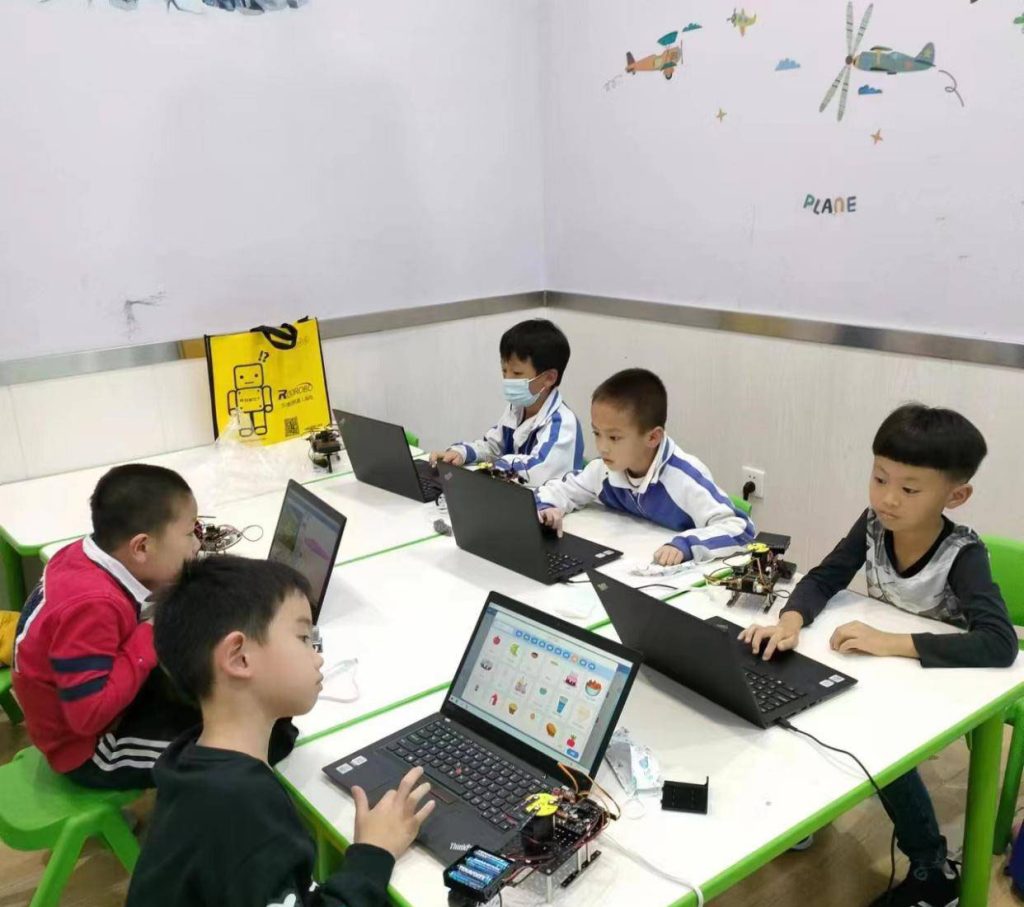
During the playful learning process, children gradually develop logical thinking, problem-solving skills, trial-and-error abilities, and innovative thinking. Every successful program operation and every completed robot project brings kids a strong sense of achievement, turning passive learning into active exploration.
Our curriculum is designed in a progressive structure, from beginner visual block coding to advanced text-based programming. It suits kids of all ages and learning levels, whether they are total beginners or learners who want to improve their tech skills.
In the era of AI and digital technology, coding is more than a technical skill. It is a fundamental ability that helps children adapt to future development. Logical thinking, hands-on practice, and creative awareness cultivated through coding learning will benefit kids for a lifetime.
Let kids learn, explore, and grow through play. Equip them with future-ready skills from an early age!
