
About Us
About STEMKidsLab Education
We are a children’s STEM skills training institution with a professional teaching team. We have delivered offline and online training programs across China and worldwide for over a decade. Drawing on years of practical experience, we have developed a full curriculum aligned with modern technological advances and tailored for young learners.
We specialize in kids’ robotics coding and AI programming, fields that perfectly match today’s prevailing industry trends.
Against the backdrop of AI reshaping the workforce across countless industries, demand for roles in technology, engineering, digital sectors and innovative R&D continues to surge. By building a solid technical foundation from an early age, children can better adapt to the digital era and enjoy a wider range of career options in the future.
Engaging & Diverse Learning Methods
Our physical kits and video courses inspire children to experiment hands-on and innovate boldly, breaking free from rote memorization. They stimulate imagination and cultivate kids’ abilities in independent thinking, problem-solving, creativity and practical skills. Children will steadily build professional knowledge and sharpen logical thinking.
Online Training Courses
Our online courses cover nearly the same curriculum as offline classes, yet cost roughly one-tenth of the offline tuition fees. This lets you affordably give your children the chance to master STEM skills with far lower expenses.
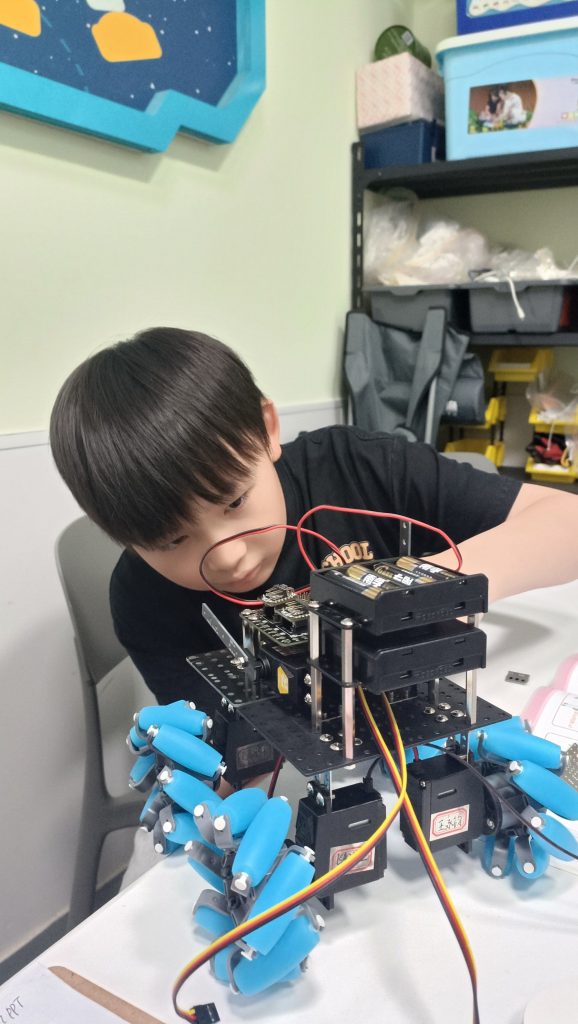
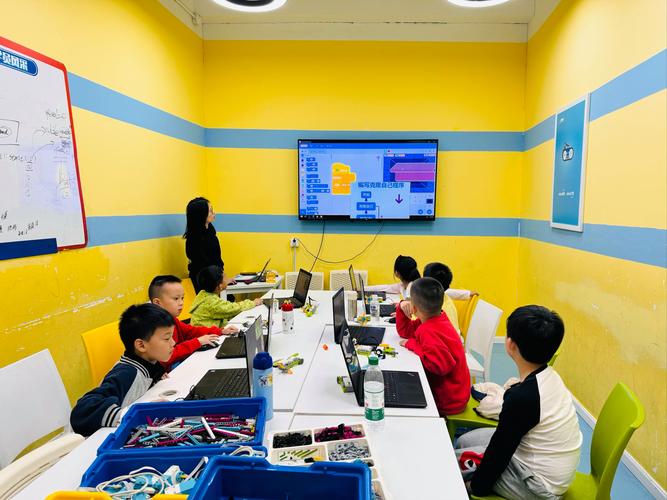
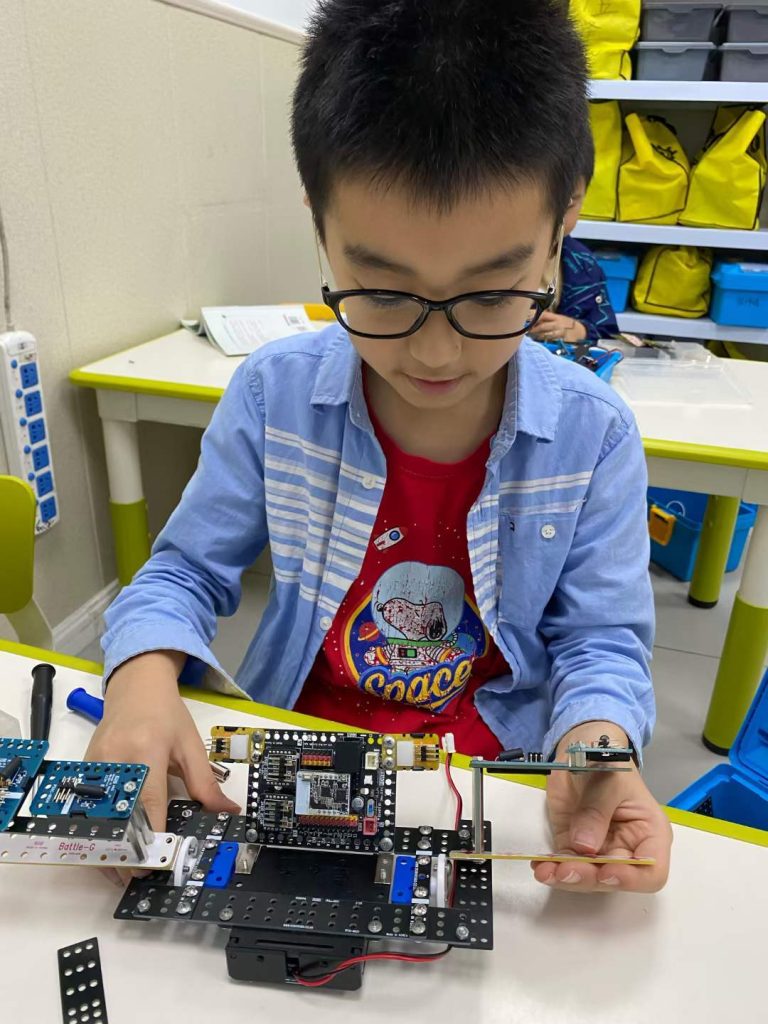
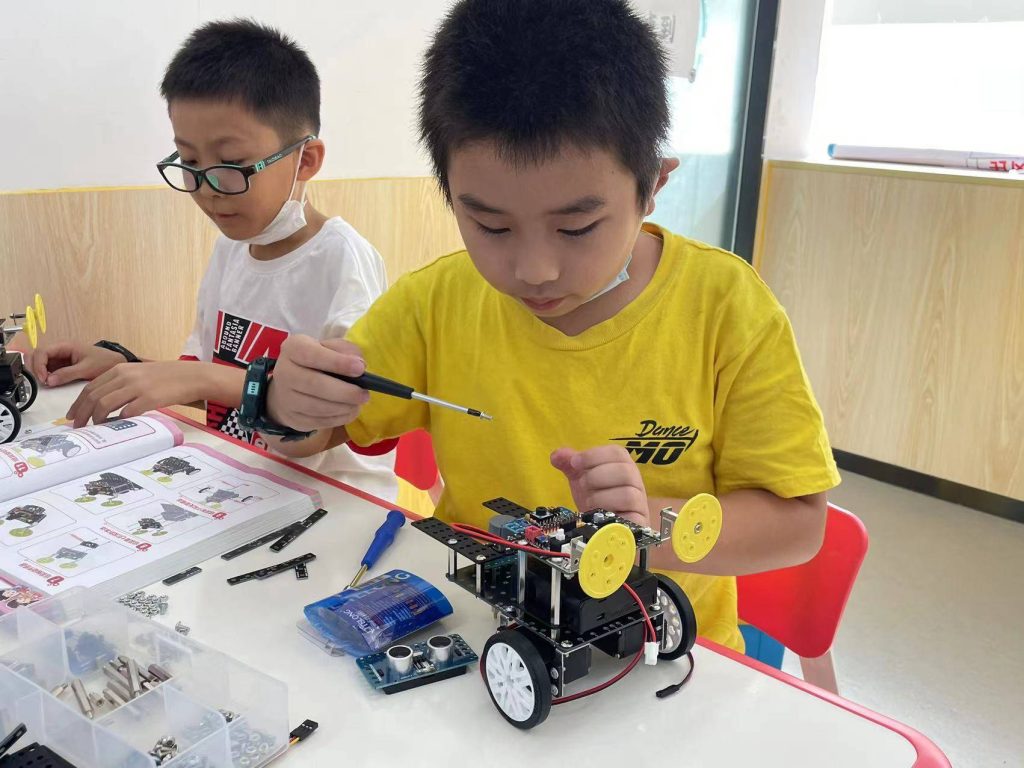
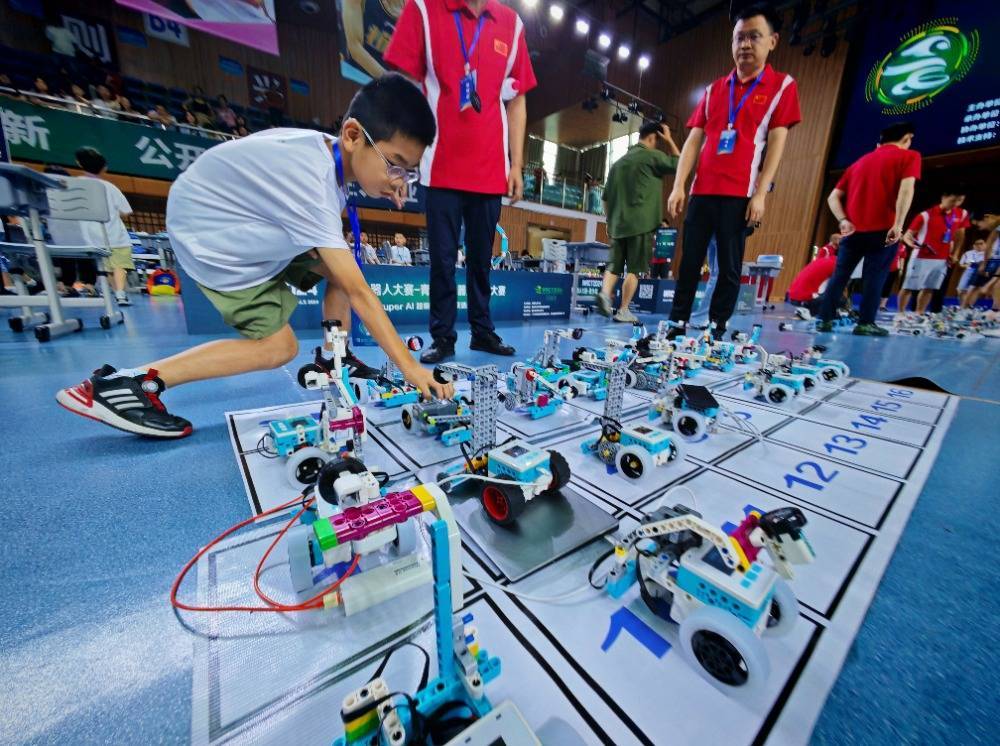
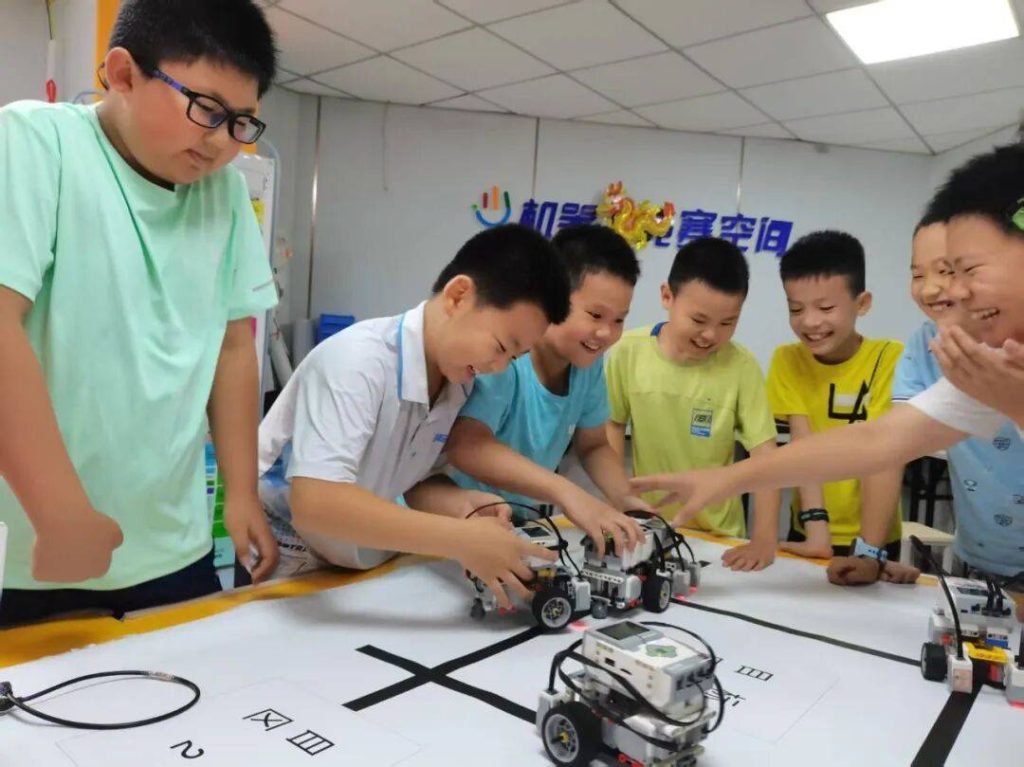
We adopt a learn-through-play approach.
Science (S)
Children conduct experiments by hands-on operation of motors, gears and sensors to explore physical principles including force, energy and friction. Meanwhile, they develop capabilities in observation, logical reasoning and scientific analysis.
Technology (T)
Students learn graphical programming, device connection and parameter debugging to develop digital literacy, operational proficiency and foundational computational thinking.
Engineering (E)
Students assemble and build models from scratch, design structures and optimize solutions to cultivate spatial thinking, design capabilities and hands-on problem-solving skills.
Mathematics (M)
While building models and writing programs, students apply numbers, proportions and geometric principles to strengthen their logical deduction, computation and data analysis capabilities.